How to Size a Generator
The right generator size comes from the loads you want to run — not the size of your house. Here's what actually goes into sizing a system correctly.
How is a generator sized?
The Factors That Actually Matter
Sizing a standby generator is an engineering question, not a guess. These are the factors that shape the answer.
Loads, Not Square Footage
Sizing is driven by the electrical loads you want to run — not the size of your house. Two similar homes can need very different systems.
Starting vs. Running Loads
Motors like well pumps and air conditioners draw a surge of power when they start. Sizing has to account for those peaks, not just steady demand.
Heating & Cooling
Electric heat, heat pumps, and air conditioning are among the largest loads in a home and heavily influence system size.
What Runs at Once
Whether loads run simultaneously or can be staggered changes how large a system needs to be.
Fuel Supply
A larger system uses more fuel. Propane tank size or natural gas availability factors into the plan.
Coverage Goal
Essential-circuit backup and whole-home coverage lead to very different sizes — so the goal comes first.
Build Your Backup Priority List
Sizing a generator starts with knowing what you want to keep running. Select the loads that matter to your household — this isn't a quote or a kilowatt calculation, it's the starting point we use to size a system correctly during your assessment.
Heat & Water
Kitchen & Food
Comfort & Daily Life
Property & Extras
0 loads selected
Select the loads you'd want running during an outage to build your priority list.
Sizing for Northern Wisconsin Homes
Backup power here has to account for hard winters, rural properties and long distances between neighbors. It shapes how we plan every system.
Well pumps drive sizing
On rural Northern Wisconsin properties, the well pump is often one of the largest starting loads — and one of the most important to keep running. It's a key factor in sizing.
Winter heating loads
Homes with electric heat or heat pumps carry heavier winter loads, exactly when outages are most likely. Sizing has to hold up in the season it's needed most.
Room to grow
Planned additions — a shop, an EV charger, an outbuilding — are worth considering up front so the system isn't undersized a year later.
Real Jobs, Not Stock Photos
Actual Christopher Power Systems installations relevant to this service — photographed on real Northern Wisconsin properties.
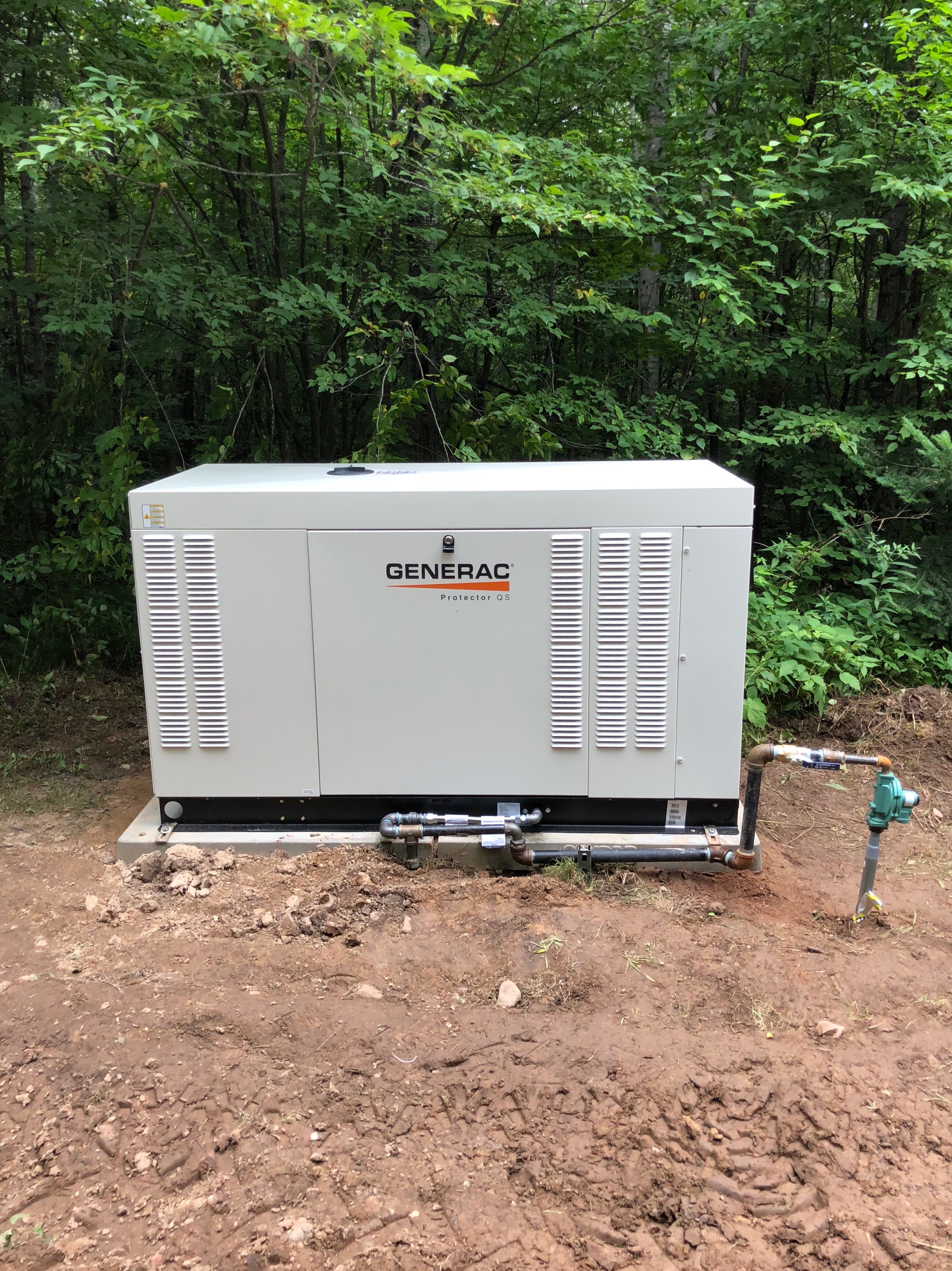
A larger Generac Protector QS unit set and piped for a higher-demand property.
See more real installations from across Northern Wisconsin.
View Our WorkFrequently Asked Questions
Straight answers to what homeowners and businesses ask us most.
Generator sizing is based on the electrical loads you want to power and how they run together — especially high starting loads like well pumps and air conditioning. The most reliable way to size a system is an on-site assessment that reviews your panel, your loads, and your priorities. Square-footage rules of thumb tend to miss the mark.
Not accurately. Two homes of the same size can have very different electrical loads depending on heating type, well pumps, appliances, and how the household uses power. Sizing on real loads is what keeps a system from being undersized or overbuilt.
An undersized generator can struggle to start large loads or become overloaded when several run at once, which is why accounting for starting loads matters. Correct sizing avoids that by matching the system to your actual demand.
No — and it's not meant to. The selector helps you think through which loads matter so we start the conversation in the right place. Final sizing comes from a hands-on assessment of your property and electrical system.
Keep exploring
Backup power and electrical work connect. Here's what most often pairs with this service.
Home Standby Generators
Permanently installed backup power that starts automatically when the grid goes down.
Whole-Home Generators
Systems designed to carry most or all of a home's electrical load during an outage.
Generator Installation
Sizing, placement, electrical integration and transfer equipment installed as a complete system.
Related guides
Straight answers to the questions we hear most about backup power.
Get Your System Sized the Right Way
Bring your priority list to a free power assessment. We'll turn it into a system sized to your real loads.