Generator Installation
From sizing to startup, a complete standby generator installation done right — so your backup power is ready the first time you need it.
What does professional generator installation include?
A Generator Is Only as Good as Its Install
The equipment matters, but the installation is what makes a standby system reliable. Correct sizing, a properly integrated transfer switch, a sound fuel connection, and a real startup test are the difference between backup power that works on outage night and one that doesn't.
We handle the entire installation — and because we're a licensed electrical contractor, the electrical side is done right rather than subcontracted out.
How Installation Works
A clear, five-step process from assessment to a tested, working system.
- 01
Power Assessment
We walk your property, review your electrical panel, and talk through the loads you want to keep running to size the system correctly.
- 02
System & Site Plan
We recommend a system and plan placement, fuel connection, and how it ties into your electrical service — including any permitting needed.
- 03
Fuel & Electrical Prep
The pad, fuel line, and electrical connections are prepared so the generator and transfer switch integrate cleanly with your home.
- 04
Installation & Transfer Switch
The generator is set and wired in through an automatic transfer switch that safely separates your home from the grid during operation.
- 05
Startup & Testing
We commission the system, run it under load, confirm the automatic transfer works, and show you how it operates.
The Scope of a Proper Installation
Every installation is built on the same foundations, regardless of the system.
Correct Sizing
Installation starts with sizing the system to your real loads — including heavy starting loads — so it performs when it counts.
Automatic Transfer Switch
The transfer switch is the heart of a safe installation, isolating your home from the grid before backup power flows.
Fuel Integration
We connect the system to propane or natural gas and account for fuel capacity as part of the plan.
Installed to Code
Electrical integration and permitting are handled so the system meets requirements and works safely with your service.
How Power Flows Through a Standby System
Every standby installation ties four parts together so the transition between grid and generator power happens safely and automatically.
Utility Power
Grid power feeds the property day to day.
Standby Generator
Detects the outage and starts automatically.
Transfer Switch
Safely switches the home to generator power.
Your Circuits
Selected or whole-home loads stay powered.
Installing for Northern Wisconsin
Backup power here has to account for hard winters, rural properties and long distances between neighbors. It shapes how we plan every system.
Placement for winter
Snow load and clearances matter in Northern Wisconsin. Placement is planned so the system stays accessible and serviceable year-round.
Rural fuel supply
Many area installations run on propane. We factor tank location and capacity into the plan for properties without natural gas.
Cold-weather startup
We commission and test the system so it starts reliably in the conditions it's actually built for.
Real Jobs, Not Stock Photos
Actual Christopher Power Systems installations relevant to this service — photographed on real Northern Wisconsin properties.
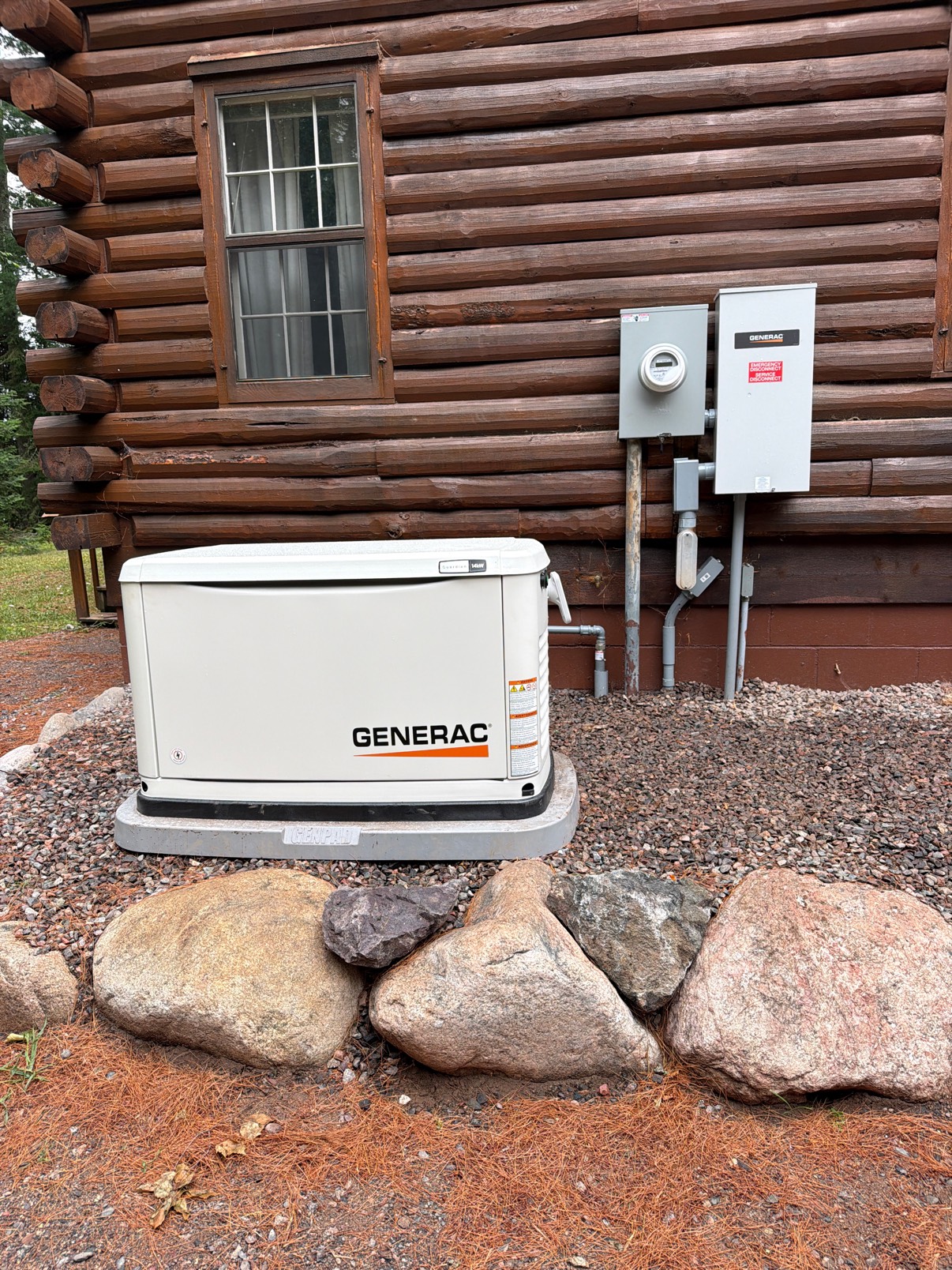
Whole-home standby generator and service disconnect installed at a Northern Wisconsin log cabin.
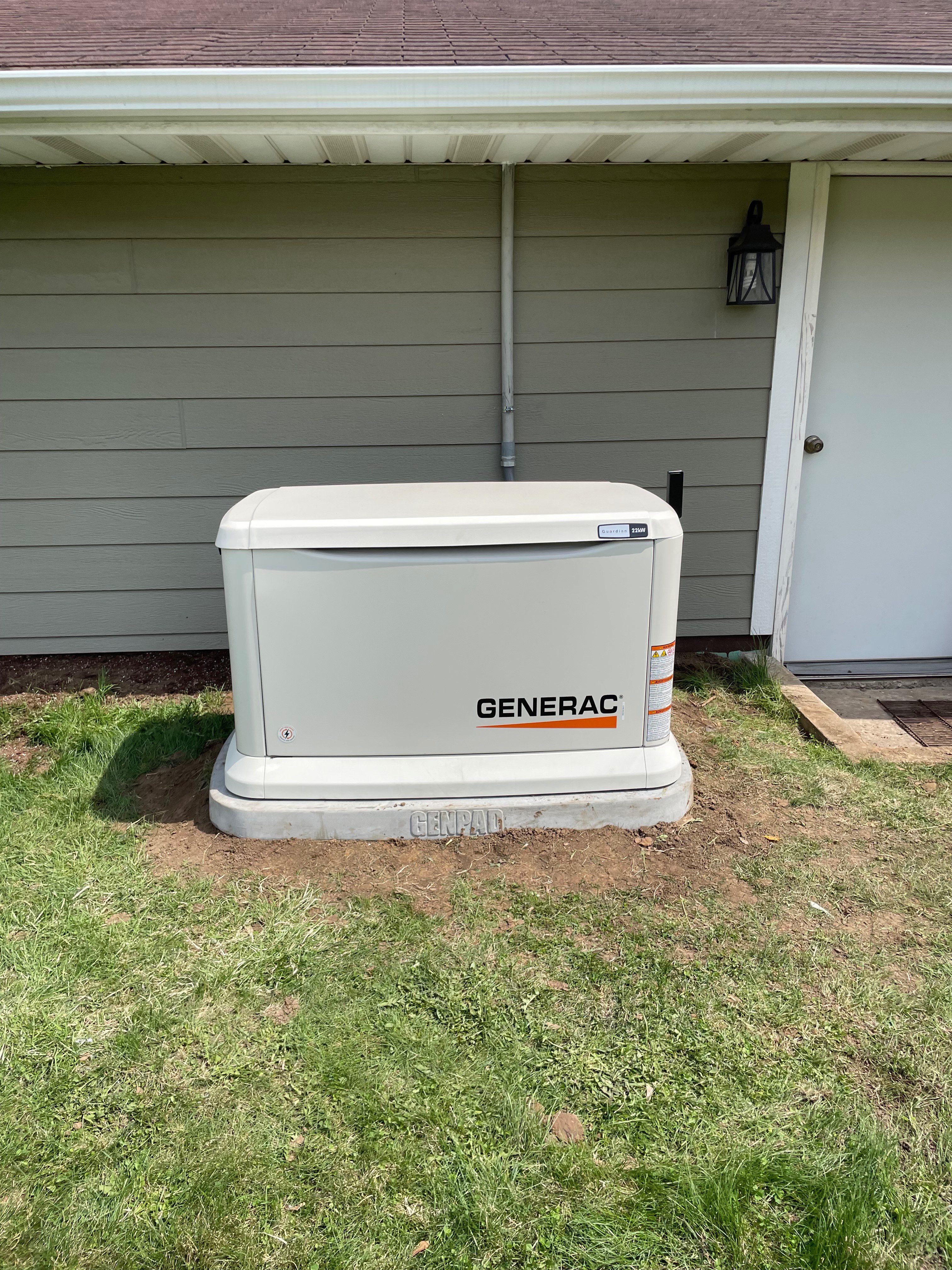
A completed whole-home Generac Guardian install, ready for automatic backup power.
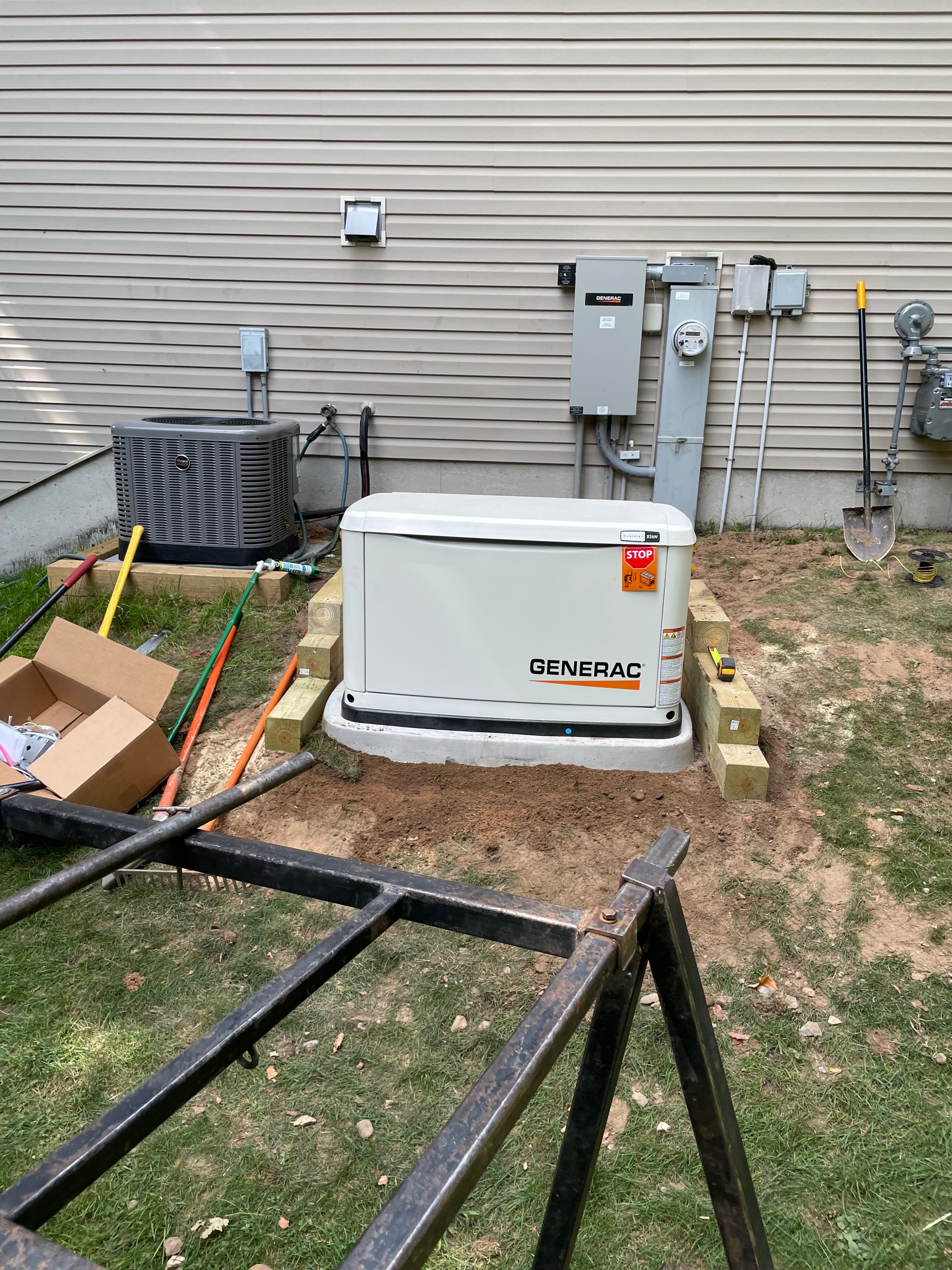
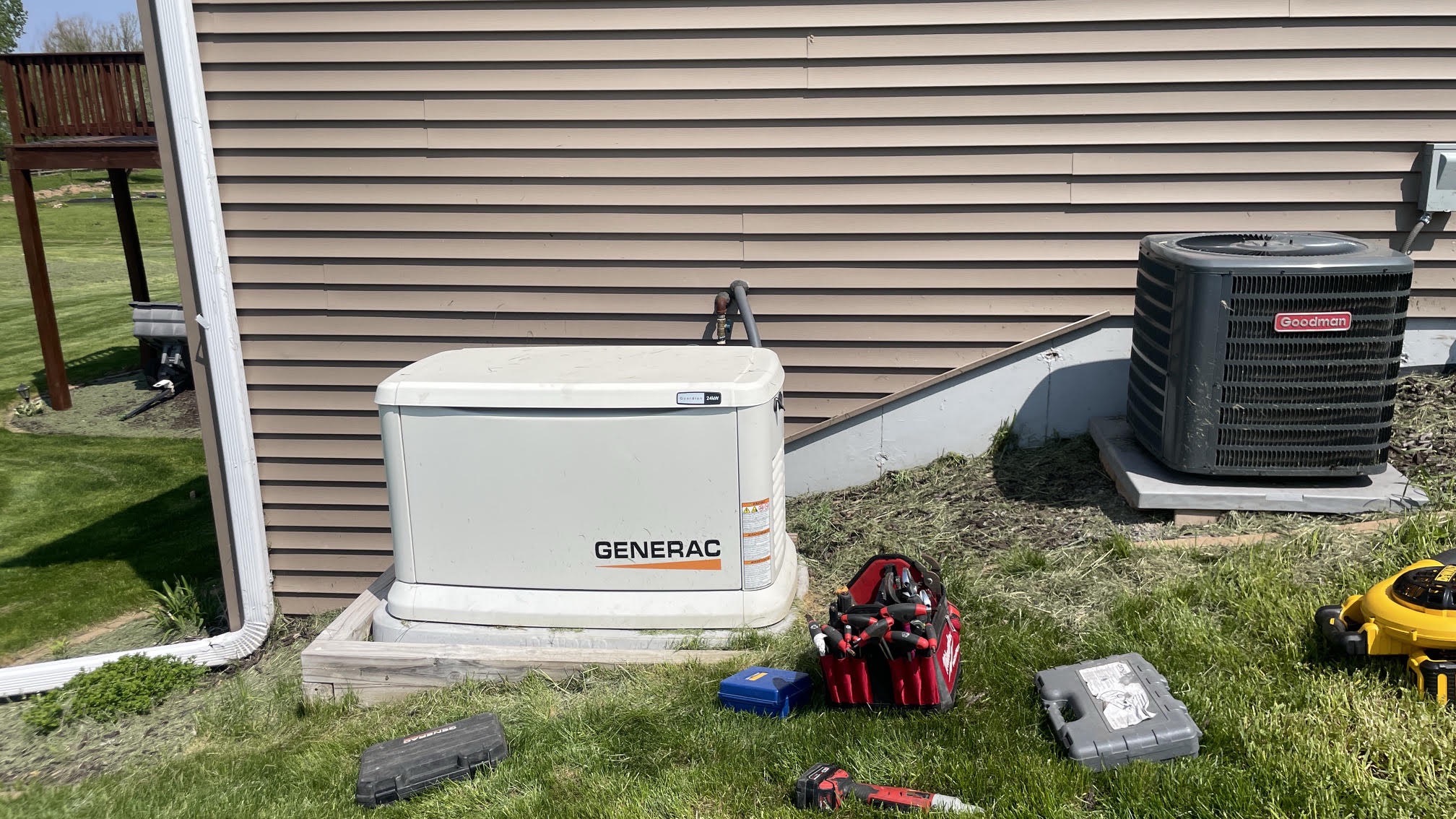
Mid-installation: generator set, transfer switch mounted, and gas and electrical being tied in.
See more real installations from across Northern Wisconsin.
View Our WorkFrequently Asked Questions
Straight answers to what homeowners and businesses ask us most.
A proper installation covers sizing the system to your loads, planning placement and fuel, integrating it with your electrical panel through an automatic transfer switch, handling any permitting, and commissioning and testing the system under load. We manage the full process from assessment to startup.
Yes. Electrical integration and permitting are part of a complete installation so the system meets requirements and ties into your service safely.
It depends on the system, the site, fuel connection, and any electrical or permitting work involved. We give you a clear picture of the scope and sequence after assessing your property.
Yes. An automatic transfer switch is a core part of a standby installation — it's what lets the system take over automatically and safely. We install and integrate it as part of the project.
Keep exploring
Backup power and electrical work connect. Here's what most often pairs with this service.
Generator Sizing
How standby generators are sized around real electrical loads — not square footage.
Automatic Transfer Switches
The device that safely moves your home between utility and generator power.
Whole-Home Generators
Systems designed to carry most or all of a home's electrical load during an outage.
Related guides
Straight answers to the questions we hear most about backup power.
Ready to Install Backup Power?
Get a free power assessment. We'll size the right system and handle the installation from start to finish.