How Much Does a Whole-House Generator Cost?
The factors that determine a standby generator project cost — and what a real quote should include.
Quick answer
The cost of a whole-home standby generator depends on far more than the generator itself. System capacity, transfer equipment, fuel setup, electrical requirements, generator placement, site preparation and installation complexity all affect the total project. Because those factors vary so much from property to property, the honest way to understand cost is to understand what drives it — and to get a project-specific quote rather than trusting a generic price range.
A generator's price tag is only one line item. The complete project cost is driven by the whole system and the site.
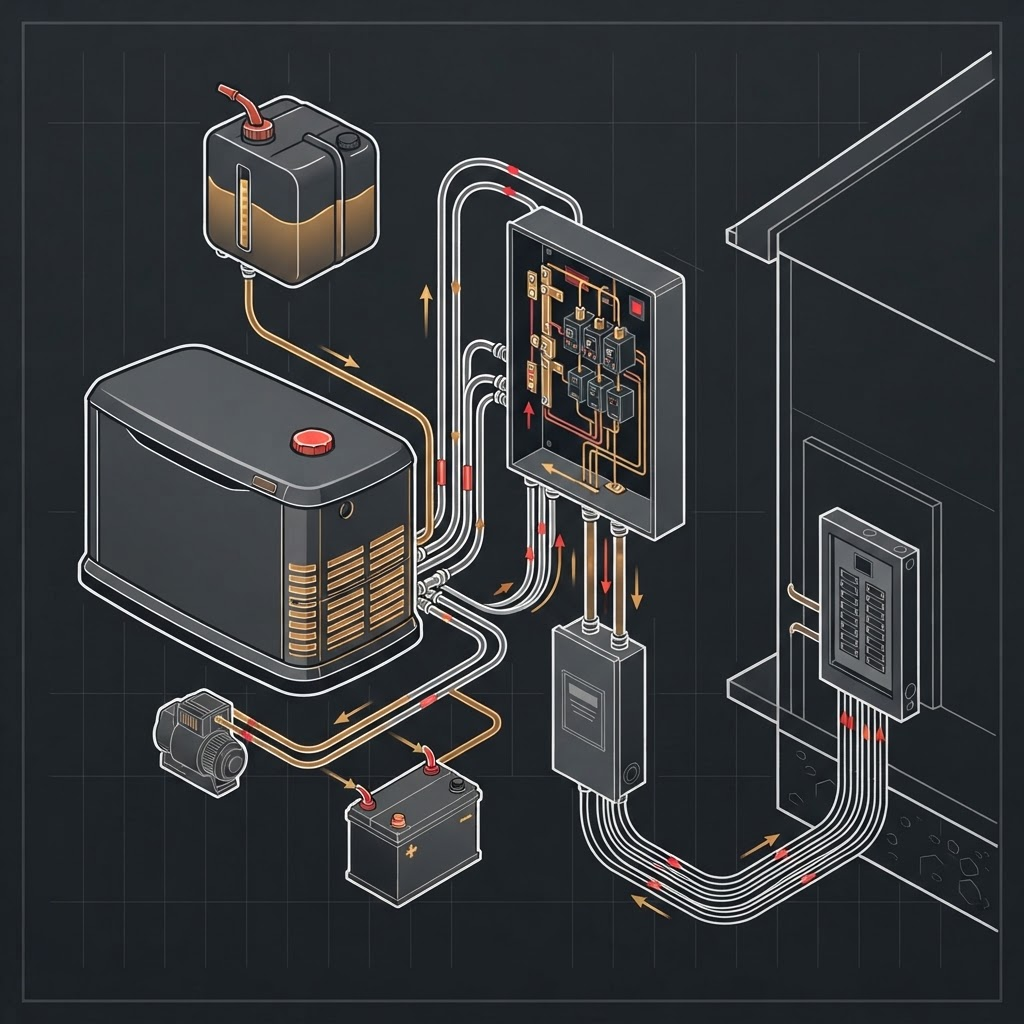
It's tempting to think of a standby generator as a single purchase, like an appliance. In practice it's a system: the generator, the equipment that transfers power safely, the fuel supply, the electrical integration and the work to install it all correctly. Each of those affects the total.
Why we don't publish a price range
A single 'whole-home generator costs $X' figure would be misleading, because the same generator can be a straightforward install at one property and a complex one next door. We'd rather explain what drives cost and give you a real number for your property.
- Generator equipment
- The unit itself, sized to your loads. Larger capacity generally costs more.
- Transfer equipment
- The automatic transfer switch and any load management — the gear that moves the home between utility and generator power safely.
- Electrical requirements
- Panel condition, circuit work and how the system integrates with existing wiring.
- Fuel system
- Propane or natural gas setup, tank and line work where applicable.
- Generator location
- Distance from the panel and fuel, plus placement requirements, affect labor and materials.
- Site preparation
- The pad or base and any grading or access work the site needs.
- System capacity
- Essential-load vs. whole-home coverage changes both equipment and installation scope.
- Installation complexity
- Every property is different; access, distances and existing conditions all matter.
- Optional monitoring / accessories
- Remote monitoring and add-ons where compatible with the system.
- Maintenance
- Ongoing service to keep the system ready is part of the lifetime cost, not the install price.
Where required, permitting and inspection are part of a proper installation. They exist to confirm the work is safe and to code, and they're a normal part of a legitimate project rather than an optional extra.
Questions a complete quote should answer
What size is the generator, and why?
The capacity should be tied to a load evaluation, not a guess.
What transfer equipment is included?
The automatic transfer switch and any load management should be specified.
What electrical work is covered?
Panel work, circuits and integration should be spelled out.
How is the fuel handled?
Propane or natural gas setup and any tank/line work should be clear.
What site prep is included?
The pad or base and any access work should be listed.
Are permits and inspection included where required?
A legitimate quote accounts for them.
What maintenance is recommended?
Ongoing service keeps the system ready and protects its life.
From the field
When you compare two quotes, compare what's inside them. A lower number that leaves out transfer equipment, electrical work or permitting isn't actually cheaper — it's incomplete.
Get a project-specific power assessment
Every property is different. Get guidance specific to yours.
Frequently asked questions
Frequently Asked Questions
Straight answers to what homeowners and businesses ask us most.
Because the same generator can be a simple install at one home and a complex one at the next. The generator is only part of the cost — transfer equipment, electrical work, fuel setup and site prep all vary by property. A project-specific assessment gives you a real number instead of a misleading range.
It varies, but transfer equipment, electrical integration and fuel setup are common significant items. On some properties, site preparation or the distance between the panel, generator and fuel source is the bigger factor.
Larger capacity generally increases equipment cost and can affect installation, but the difference isn't only the unit. Right-sizing matters in both directions — paying for capacity you'll never use is as wasteful as undersizing the system.
Where they're required, yes. Permitting and inspection confirm the installation is safe and to code. They're a normal part of a proper project, not an upsell.
Related services
- Whole-Home GeneratorsSystems designed to carry most or all of a home's electrical load during an outage.
- Generator InstallationSizing, placement, electrical integration and transfer equipment installed as a complete system.
- Generator SizingHow standby generators are sized around real electrical loads — not square footage.
- Automatic Transfer SwitchesThe device that safely moves your home between utility and generator power.
Sun or storms, we have you covered
Get a free, no-pressure power assessment tailored to your property and priorities.